After eleven years on the floor of a busy Sydney bathroom showroom, I’ve heard the same frustrated lament more times than I can count: "I just want my bathroom to feel like a hotel, but it currently feels like a dentist’s waiting room."
They usually aren't talking about the tiles or the tapware. They are talking about the light. You see, most people view their bathroom as a purely utilitarian space—a place to brush, wash, and leave. But as a consultant who has seen the evolution of the Aussie home, I can tell you that the bathroom has shifted. It is now our primary wellness sanctuary, our morning ritual space, and our evening wind-down zone. If the lighting is one-dimensional, you aren’t just missing a design opportunity; you’re missing the psychological reset that a good bathroom should provide.
When we talk about a bathroom lighting plan, we aren't talking about fancy tech jargon designed to confuse you. We are talking about how light makes you feel. Let’s strip back the buzzwords and look at what "layered lighting" really means for your home.
The Psychology of Luxury: It’s Not About Size
We often equate luxury with scale—large tubs, walk-in showers, and marble slabs. But true luxury in a bathroom is about mood, calm, and simplicity. It’s about being able to see what you’re doing when you’re applying skincare, but also being able to turn the intensity down when you’re soaking in the tub at 9:00 PM.

I often tell my clients: don't "just renovate." That’s a dangerous phrase that assumes unlimited budget and zero disruption. Instead, think about the small changes that change the whole room. Lighting is the absolute leader in this category. It costs a fraction of a re-tiling job but completely alters the architecture of the space.
The Three Pillars of Layered Lighting
When you start researching bathroom lighting ideas, you’ll inevitably run into the trio of ambient, task, and accent lighting. Let’s look at what these actually are, without the sales-fluff.
1. Ambient Lighting (The "Soft Start")
This is your general fill light. It’s the light that greets you when you walk in. In a poorly designed room, this is usually one harsh downlight in the centre of the ceiling that casts unflattering shadows under your eyes and nose. We want to move away from that. Aim for softer, diffused light that hits the walls rather than just the floor.
2. Task Lighting (The "Precision Phase")
This is where most people get it wrong. Task lighting needs to be purposeful. If you’re shaving or applying makeup, you need light that hits your face from the front, not from above. This is where mirror placement is non-negotiable. If your light source is behind you, you’re creating a shadow box. I’ve spent years physically standing in showrooms holding a mirror to show people exactly where the light should land. You want high Colour Rendering Index (CRI) light here—light that shows your skin as it truly is.
3. Accent Lighting (The "Mood Setter")
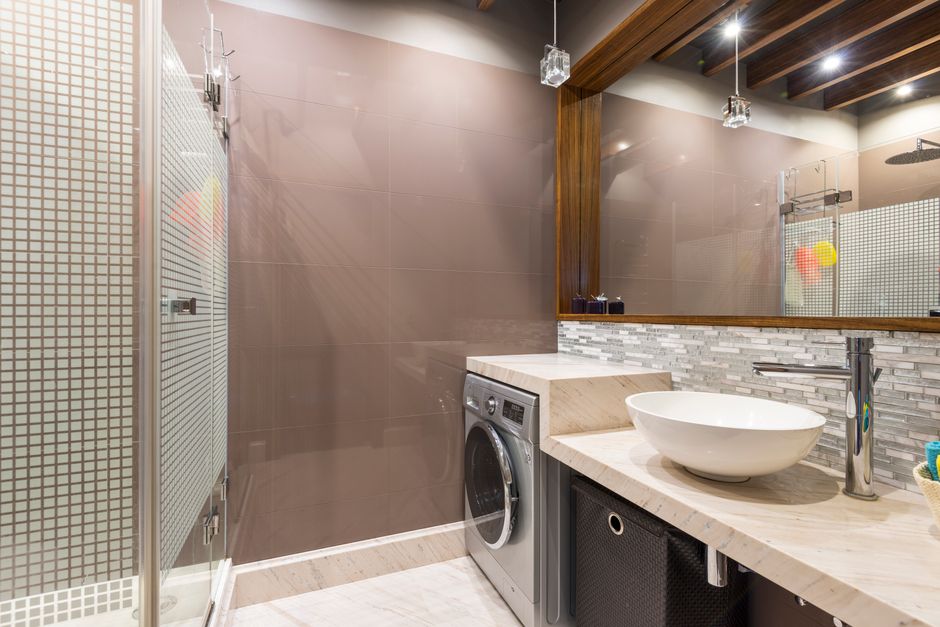
This is the fun part. This is about highlighting textures—a feature wall of natural stone, a timber vanity, or the architectural shape of your bathtub. It’s not about seeing; it’s about feeling. It creates depth. Without it, a room looks flat.
Putting Your Bathroom Lighting Plan Together
If you’re stuck, my advice is always to start with the mirror. A common error I see on platforms like Shutterstock—where bathroom photography often prioritises aesthetics over function—is the placement of lights that don't serve the user. Always check your mirror placement relative to your light temperature. A cool, blue-white light (6000K+) might make the bathroom look "clean," but it makes your skin look tired. Aim for something in the 3000K to 4000K range for a warmer, more flattering glow.
When exploring options, I often point people toward the LED Mirror World website. They offer a great range of integrated lighting solutions that bridge the gap between task and ambient light. Having your task lighting integrated into the mirror is one of those "small changes" that saves you from needing a complex electrical plan for wall sconces, which can often be a headache if you’re working with existing wall structures.
Light Type Primary Purpose Best Placement Ambient General navigation, feeling of openness. Ceiling perimeter, indirect wall wash. Task Grooming, precision, hygiene. Either side of the mirror or integrated into the mirror edge. Accent Mood, highlighting textures/features. Under-vanity strips, niche lighting, or bath feature lighting.A Note on Budget Reality
I need to address something that really grinds my gears: the tendency of design blogs to throw around price tags or suggest "affordable luxury" without the data to back it up. You might have noticed some articles online that scrape product lists but fail to provide any pricing. That is intentional, and frankly, it's safer for you. Prices fluctuate based on local availability, electrical install costs, and customisation. Never trust a "budget" guide that doesn't account for the electrician's hourly rate.
If you're looking for local inspiration, I often browse the Bendigo Advertiser archives. Not for specific product pricing—which obviously changes—but for the "lifestyle" sections that often feature how regional homeowners are tackling renovations. Sometimes you need a subscription or a login flow to access the deeper-dive features, but the stories are grounded in Australian reality, not the "Pinterest-perfect" delusion. It helps to read about the process, not just look at the filtered photos.
The "Small Changes" Checklist
Because I can’t help myself, here is my running list of low-cost, high-impact changes for your lighting plan:
Final Thoughts: The Ritual Over the Room
When we stop thinking about the bathroom as a place to scrub and start thinking about it as a space to prepare for the day or recover from it, the lighting plan becomes clear. It isn't about having the most expensive fittings. It’s about having the right light in the right place, at the right time.
Take your time. Visit the LED Mirror World website to see how integrated solutions might solve your task-lighting issues. Read the Bendigo Advertiser for that local, grounded perspective on home improvements that don't involve tearing your house down to the studs. Be realistic about your budget, skip the "just renovate" advice, and focus on the small shifts that make the room feel like it was designed for a human, not a showroom catalogue.
Your bathroom should be the most comforting room in your house. Give it the light it deserves, and you’ll find that the daily https://www.bendigoadvertiser.com.au/story/9276788/why-australian-homeowners-are-bringing-hotel-style-bathrooms-into-their-homes/ ritual of washing your face becomes a little less of a chore, and a little more of a luxury.